
Furnace Repair Cost: What You'll Pay and Why Prices Vary
Furnace Repair Cost: What You’ll Pay and Why Prices Vary

Most furnace repairs cost between $140 and $400, and the average repair visit runs about $270, according to The Spruce. Small fixes such as a flame sensor or ignitor sit at the low end. Big parts such as a heat exchanger or blower motor push a bill past $1,000. Below you will find prices by part, what a service call fee covers, what changes the final number, and how to decide whether a repair is still worth it.
TL;DR
- Typical furnace repair: $150 to $600. Major components: $1,000 to $3,000, per Bryant’s repair guide.
- Ignitor replacement averages $300 to $425 with parts and labor. The part itself is only about $25 to $50.
- Expect a service call or diagnostic fee of roughly $50 to $200, which some companies credit toward the repair.
- Emergency and after-hours visits can add $100 to $300.
- Compare at least two or three local quotes in writing before approving anything above a few hundred dollars.
Table of Contents
- What furnace repair costs on average
- Furnace repair cost by part
- What’s included in the bill
- Why prices differ from house to house
- Repair or replace: a simple way to decide
- Ways to keep the bill down
- Our perspective
- Find a local furnace repair provider
- FAQ
- Sources
What furnace repair costs on average
Published national ranges differ because each source samples different jobs, but they tell a consistent story: most repairs are modest, and a few are not.
- Trane (2024) puts the full range at $150 to $3,000.
- The Spruce (October 2024) says most repairs fall between $140 and $400.
- United HVAC Motors (January 2026) reports $150 to $600, with a national average around $350 to $400.
- Carrier, citing Forbes data, says a typical repair is $150 to $300. Minor fixes can cost as little as $50, and severe problems such as a cracked heat exchanger can exceed $1,200.
A sensible planning figure for a common no-heat call is $150 to $600. Keep a cushion for the rarer, larger failures.
Furnace repair cost by part
The part that failed is the biggest driver of the bill. Figures below combine two published guides, so you can see the spread.
| Repair | Trane (2024) | United HVAC Motors (2026) |
|---|---|---|
| Flame sensor | $80 to $240 | $100 to $250 |
| Ignitor | $100 to $250 | $150 to $400 (hot surface igniter) |
| Run capacitor | not listed | $100 to $250 |
| Gas valve | $200 to $800 | not listed |
| Blower motor | $300 to $900 | not listed |
| Heat exchanger | $1,000 to $3,000 | $1,000 to $3,500+ |
Sources: Trane and United HVAC Motors.
United HVAC Motors notes that flame sensors, igniters and capacitors dominate failure statistics and are the inexpensive end of the list. That is good news: the most frequent reasons a furnace stops heating are also among the cheapest to fix.
Gas furnace repair cost
Most furnaces in American homes burn natural gas, so the figures above are largely gas furnace numbers. Bryant reports that minor repairs such as a thermostat, flame sensor or ignitor cost $150 to $600, while major component repairs such as a heat exchanger or blower motor run $1,000 to $3,000. Gas valves and the safety components around the burner sit in between, at the $200 to $800 range Trane lists for the valve.

Furnace ignitor replacement cost
The ignitor is the part that lights the burner, and it wears out from repeated heating cycles. According to Today’s Homeowner (updated April 2025), a professional ignitor replacement averages $300 to $425 including parts and labor. The part costs around $25 to $50, and labor under a manufacturer’s warranty is $200 to $350.
Other guides quote lower or higher totals, from $100 to $250 on the low side and up to $400 for a hot surface igniter. The difference usually comes down to the furnace model, how easy the part is to reach, and whether the visit fee is folded in. When you get a quote, ask whether the number includes the diagnostic fee.

The most expensive furnace repairs
The heat exchanger is the costliest repair. The Spruce puts the average near $2,000. Carrier’s figures cited above show severe problems like a cracked exchanger exceeding $1,200, and United HVAC Motors says a crack usually means replacing the furnace rather than repairing it. A cracked exchanger is also a safety matter, because it can let combustion gases into the airflow. If a technician finds one, follow their instruction to shut the furnace off.
What’s included in the bill
A furnace repair invoice has three pieces.
- Service call or diagnostic fee. Trane says the fee averages $50 to $200, and some companies apply it toward the repair if you proceed. United HVAC Motors gives a diagnostic range of $75 to $150 that is often credited the same way.
- Labor. Trane lists hourly rates of $75 to $150. Many simple repairs take an hour or less, but the first visit often includes troubleshooting time.
- Parts. Common parts are cheap. A $30 ignitor becomes a $300 job because of the visit and the labor, not the part.
Emergency or after-hours service adds $100 to $300, per United HVAC Motors. If your furnace quits on a cold night and your home is safe to stay in, comparing a morning appointment against a late-night premium can save real money. If you have no heat and vulnerable people at home, or you smell gas, safety comes first: leave the house and call your gas utility’s emergency line.
Why prices differ from house to house
Location
Trane lists location as the first factor. Large metro areas with a high cost of living and unionized labor charge more. In smaller towns, prices depend on how many HVAC companies serve the area and how competitive the market is. The same ignitor job can be a few hundred dollars apart between two ZIP codes.
Furnace age and parts availability
Bryant lists system age and replacement-part availability among the factors. Older units may need parts that are harder to find, which raises both the part price and the labor time.
Time of the visit
Winter demand is high. Emergency and weekend calls cost more, and scheduling in a mild week can cost less.
Warranty
Trane advises that parts may be covered if your furnace is under warranty, but unless you have an upgraded warranty or a separate labor warranty with the original installer, you may still pay for labor. Find your paperwork and the install date before you call, and tell every company you contact that the unit may be covered.
Repair or replace: a simple way to decide
A furnace gets replaced when repair bills stop making sense. These checks help.
- Age times repair cost. A popular rule of thumb, often called the $5,000 rule, multiplies the furnace’s age by the quoted repair price. Above $5,000, replacement deserves a hard look. A 8-year-old furnace with a $300 repair scores $2,400, so repair. A 15-year-old furnace with a $500 repair scores $7,500, so compare replacement quotes. It is a starting point, not a verdict.
- Type of failure. A flame sensor or ignitor is a routine wear item. A cracked heat exchanger is a different category: the repair range overlaps with the cost of a new unit.
- Repair history. If this is the third repair in two winters, the next one is likely to come soon too.
- Comfort and efficiency. If the home has uneven heat or rising bills, a replacement quote may buy more than a repair.
For context on the other side of the decision, our guide to HVAC replacement cost explains why homeowners should ask for a load calculation before accepting bids. If you are also thinking about cooling, see our AC installation cost guide so you can plan both systems together.
Ways to keep the bill down
- Check the simple things first. Confirm the thermostat has power and is set to heat, the breaker is on, and the filter is not clogged. A technician should not be needed for those.
- Ask what the diagnostic fee covers. Find out whether it is credited toward the repair.
- Get the quote in writing before work starts. It should name the part, the labor hours and any fees.
- Compare two or three local providers. Prices for the identical repair vary by area and by company, as the location factor shows.
- Avoid the emergency premium when you can. A cold house with a safe, working space heater alternative can wait for regular hours. Do not use unvented fuel-burning heaters indoors.
- Budget for a tune-up. Routine checks catch worn ignitors and dirty flame sensors before they fail on the coldest day.
- Learn your warranty terms. Parts coverage and labor coverage are often separate.
For other household jobs where prices are driven by the same visit-plus-labor-plus-parts structure, our appliance repair cost and plumber cost guides show what to expect.
Our perspective
Furnace repair is one of the most time-pressured purchases a homeowner makes. The heat is out, the temperature is dropping, and the first company that answers the phone often gets the job. That is exactly when prices are hardest to judge.
We built Best Service Local around a different habit: search by service type and ZIP code, so every business you see operates in your area. Profiles carry verified business details, and the comparison tools let you line up several providers side by side before you contact anyone. Compare the service call fee, what it is credited toward, and how each company handles emergency visits.
The best time to find a local HVAC provider is before the first cold night. Save two or three options now, and a no-heat call becomes a quick decision instead of a scramble.
Service
Find a local furnace repair provider
When you are ready to get quotes, Best Service Local lets you search by service type and ZIP code, open business profiles with verified details, and compare several providers side by side. It costs consumers nothing to browse, compare or make contact.
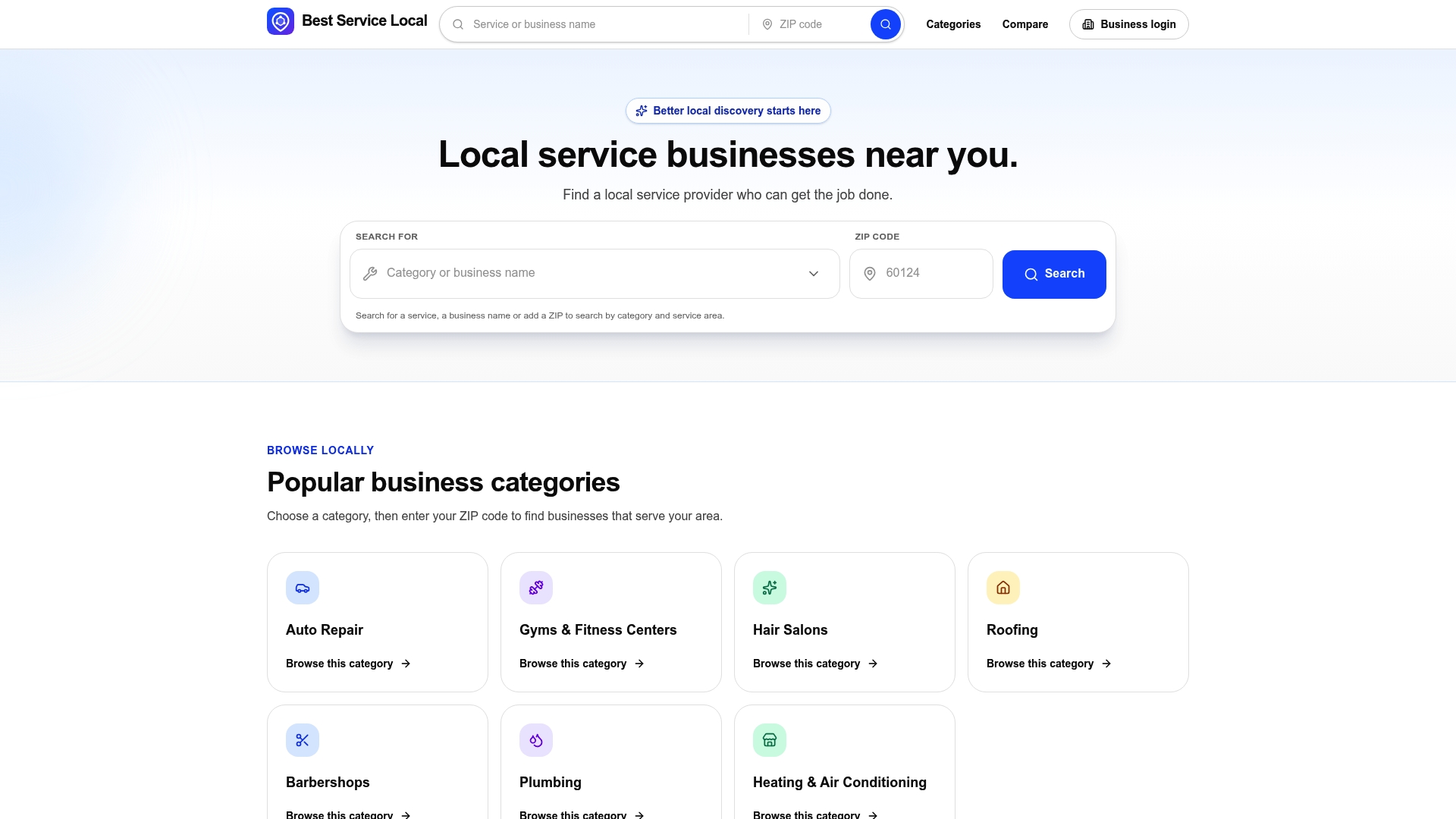
Start at Best Service Local, enter your ZIP code, and shortlist the heating providers that serve your area. For more cost guides, browse our local business guides.
FAQ
How much does it cost to repair a gas furnace?
Minor gas furnace repairs such as a thermostat, flame sensor or ignitor typically cost $150 to $600. Major components like a heat exchanger or blower motor run $1,000 to $3,000, according to Bryant. The final price depends on the part, labor rates, your location, the furnace’s age and whether the visit is an emergency.
How much does it cost to replace a furnace ignitor?
A professional replacement averages $300 to $425 with parts and labor, per Today’s Homeowner. The part itself is only about $25 to $50, so most of the price is labor and the visit. Ask whether the diagnostic fee is included or credited.
What is the most expensive furnace repair?
The heat exchanger. The Spruce puts the average near $2,000, and United HVAC Motors lists $1,000 to $3,500 or more. A cracked heat exchanger usually leads to a furnace replacement and is a safety issue, so follow your technician’s shutoff instructions.
Is a furnace repair covered by warranty?
Sometimes. Trane explains that parts may be covered under warranty, but labor often is not unless you have an upgraded warranty or a separate labor warranty with the original installer. Check your paperwork before you call.
When should I replace the furnace instead of repairing it?
A common rule of thumb multiplies the furnace’s age by the repair quote. If the result is above $5,000, compare replacement quotes. Also weigh the type of failure, how many repairs you have had recently and your heating bills.
Sources
- Average Furnace Repair Cost, Trane
- How Much Does Furnace Repair Cost?, The Spruce
- Furnace Repair Cost in 2026: Prices by Component, United HVAC Motors
- Furnace Repair Service: Signs, Costs and Troubleshooting, Carrier
- How to Repair and Troubleshoot Your Furnace, Bryant
- How Much Does a Furnace Ignitor Cost?, Today’s Homeowner