
How to Verify a Contractor License in Your State
How to Verify a Contractor License in Your State

To verify a contractor license, ask for the license number, then search it on the official lookup run by the licensing board in the state where the work happens. Confirm four things before you sign or pay a deposit: the license is active, the name on the record matches the person and company in front of you, the license class covers your job, and the insurance is current. The check takes about five minutes and costs nothing.
There is no single national database. Licensing is set state by state, and in some places by city or county, so the right lookup depends on your address. The steps below show how to find it, what to read on the result, and what to do when something does not add up.
TL;DR
- Use the licensing board for the state where the work will happen. Each state keeps its own records.
- Search by license number, business name or the owner’s name. If you search both the person and the company, you catch more mismatches.
- Read the status, expiration date, license class and complaint history, not just whether a record exists.
- Match the legal name and business name on the record to the person you are dealing with. A real number can belong to someone else.
- If the record is missing, expired or does not match, stop before any deposit or site visit.
Table of Contents
- Why checking the license comes before everything else
- Step 1: Find the right licensing authority
- Step 2: Search the record
- Step 3: Read what the result actually says
- Step 4: Match the record to the person
- Step 5: Look beyond the license
- When the check does not go cleanly
- Worked example: a Tuesday evening check
- Our perspective
- Start from providers that serve your ZIP code
- FAQ
- Sources
Why checking the license comes before everything else
A license tells you the state has recognized the contractor for a defined type of work. It is not a guarantee of quality, but it is the first filter, and it is the one you can run yourself. Louisiana’s licensing board says verifying licensure can greatly reduce your chances of becoming a victim of contractor fraud and save time and money later.
Florida’s Insurance Consumer Advocate adds a rule worth following: do not let a contractor inspect your property, including your roof, until you have confirmed they are licensed and insured. Verification comes first, the site visit second.
This applies whether you are a homeowner planning a kitchen remodel, a property manager sending someone to a burst pipe, or a business owner hiring an electrician for a build-out.
Step 1: Find the right licensing authority
Licensing in the United States is generally handled at the state level, and a separate license is usually needed in each state where someone works. Requirements differ widely. The National Conference of State Legislatures notes that because states write their own laws, requirements are set by statute, agencies or independent boards and differ significantly from state to state.
To find your board:
- Search your state name plus “contractor licensing board” and pick the .gov result. Your state’s name varies: it may be a contractors board, a department of consumer protection, a labor department or a professional regulation office.
- If you are unsure which agency covers a trade, the U.S. Department of Labor’s License Finder lets you pick a state and search by occupation to see who oversees it.
- Check the city or county too. Some work is licensed locally, not by the state.
Two examples show how much the rules differ. Florida says some work, such as cabinets, flooring and paint, may not need a state license and can be licensed through a local building department. Ohio’s board notes that residential contractors are not required to be licensed statewide, while commercial electrical, HVAC, plumbing, hydronics and refrigeration trades are regulated. So in Ohio, a missing state record for a residential remodeler is not automatically a red flag, but you should check your city or township for registration and permit rules.
Step 2: Search the record
Most state lookups work the same way. Pick the search option you have the most information for:
- License number. The fastest and most precise. Contractors must usually show it on contracts and ads. Oregon, for example, requires its CCB number on business cards and advertising.
- Business name. Try the legal name and any “doing business as” name. Connecticut’s lookup accepts a license number, business name, DBA or nickname, or a first and last name, and one or two details are enough.
- Owner or individual name. Useful when the truck says one thing and the contract says another.
Some boards have more than one tool. Ohio provides separate lookups for individuals (by name or license number) and for companies (by company name), so search both. Louisiana offers a contractor search on its website and a mobile app that also lets you report unlicensed activity. Washington’s Verify tool accepts a contractor license number, UBI business number, or a full or partial business or owner name.
Do not worry about exact spelling. Many databases accept partial names, so try a shorter version if the full one returns nothing.
Step 3: Read what the result actually says
Finding a record is only the start. Read these fields:
| What to read | What you want to see | Why it matters |
|---|---|---|
| Status | Active (or Approved) | Connecticut advises hiring only people or companies with an Active or Approved status |
| Dates | Expiration date in the future | An expired license may have lapsed weeks or years ago |
| Class or scope | Matches your job | A license for one trade does not cover another |
| Complaints and discipline | None, or resolved | Oregon’s search shows 10 years of complaint history |
| Bond and insurance | Current | Washington’s tool shows paid-to-date workers’ comp and lawsuits against the surety bond |
Two details trip people up. First, an inactive license means the contractor should not be doing the work. Oregon states that an inactive licensee cannot bid on or perform residential work. Second, endorsements matter. In Oregon, residential work without the right endorsement can cost the homeowner access to mediation and the bond.
Check that the class covers the work
A license category lists the tasks its holder may legally perform. A general contractor license may not authorize electrical or gas work, and a roofer’s record will not cover your plumbing. Match the class on the record to the scope in your quote. If the quote includes work outside that class, ask who is doing it and look that person up too.

Check the insurance separately
The license record may show a bond or workers’ compensation status, but a certificate of general liability insurance is a separate document. Florida’s guide tells consumers to request a general liability certificate of insurance and verify workers’ comp. Ohio advises calling the insurer to confirm the policy is active. For a walkthrough of what to confirm on a policy and what paperwork to keep, these insurance checks before renovating are a good companion.
Step 4: Match the record to the person
This is the step people skip. A license number can be real, active and spotless, and still belong to someone else. Numbers are easy to copy from a website or a truck door.
So compare the record against what you have in hand:
- The legal name and business name on the record against the name on the estimate and contract.
- The address of record against the company’s actual location.
- The photo ID of the person who shows up against the individual named on the license.
Virginia’s regulator, as reported by WRIC 8News, suggests searching both the person and the business. If the company shows a valid license, call it using the number on its own website or a reputable organization’s listing, not the number on the flyer, in case someone is pretending to work there.
If the names do not match, treat that as your answer. Do not argue the point on the doorstep. Walk away and report it to the board.
Step 5: Look beyond the license
A license check answers one question: is this contractor authorized to do this work? A fuller contractor background check adds a few more, and most are quick:
- Complaints. Check the board’s complaint or disciplinary history, and your state attorney general or consumer protection office. Connecticut’s lookup page suggests calling Consumer Protection at 1-800-842-2649 to ask about complaints.
- Business registration. Confirm the company exists with your state’s business registry.
- Insurance and bond. Covered above.
- References. Florida’s guide recommends references less than 12 months old and at least three itemized written estimates.
- Criminal record. A license board record is not a criminal check. Some states are adding fingerprint-based checks to licensing: Utah’s contracting division lists fingerprint-based background checks starting January 1, 2027. Where your state does not require this, court records are public, and you can read how to approach it in our guide to contractor background checks.
The same page notes Utah’s updated insurance minimums for contractors, a reminder that rules change. Always read the board’s current page, not an old article.
When the check does not go cleanly
No record found
Search again with a different spelling, the business name, and the owner’s name. If you still find nothing on the correct state board, do not hire the contractor until they explain. Be aware that some lookups only list certain license types or only active licenses, so confirm the tool covers what you are searching before you conclude anything. Then ask the contractor for the board name and number, and verify it yourself on the board’s site.
Expired, inactive or suspended
California’s board states that you cannot contract with someone holding an expired, inactive or suspended license. Some states give a short grace period to renew. Do not accept “it’s being renewed.” Wait until the record shows Active, then proceed.
Wrong class or missing endorsement
Ask the contractor to quote only the work their license covers, and hire a separately licensed professional for the rest. Do not accept a verbal assurance.
Name mismatch
Stop. Contact the board using its public number and report what you found. Most boards take reports of unlicensed activity.
Worked example: a Tuesday evening check
Say you are a homeowner in Louisiana with a quote for a bathroom remodel. The estimate shows a license number and a company name.
- Open the state board’s contractor search and type in the number. The record returns a company name and status.
- The name matches your estimate, status is active, and the class covers the work. You also search the owner’s name and find the same company.
- You call the number listed on the company’s own website, confirm the person who quoted you works there, and request a certificate of insurance.
- Only then do you schedule the site visit and discuss a deposit.
Total time: roughly fifteen minutes, with no cost.
Our perspective
Most people who get burned by a contractor did check something. They looked at a website, a review score or a truck. What they did not do was tie one verified record to one real business in their own area.
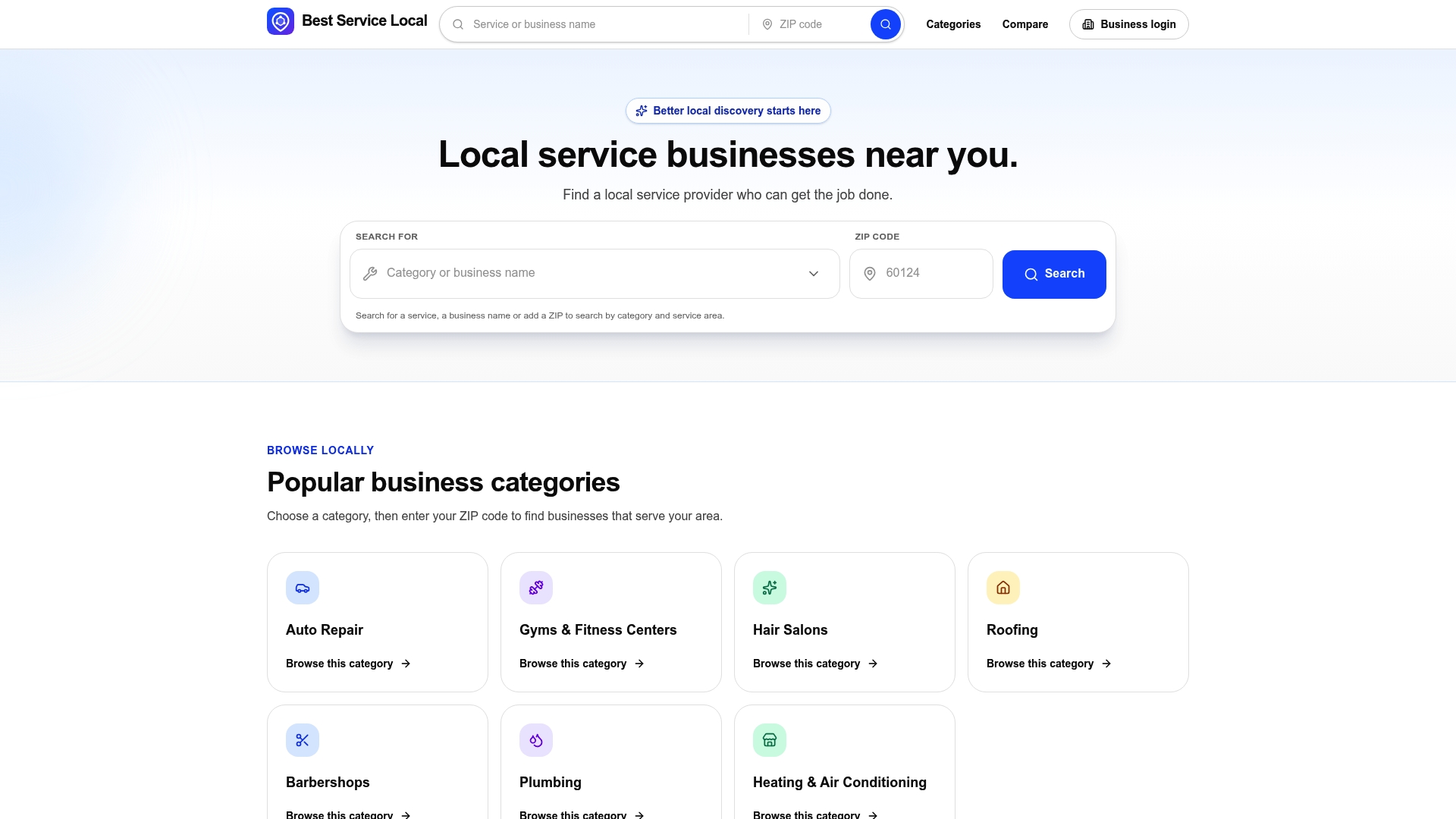
That is why we built Best Service Local around search by service type and ZIP code, so the businesses you see actually operate where you live. Each business has a profile with verified details, and you can compare several providers side by side before you reach out.
A license lookup on the state board is still the step that confirms status and class. We see the profile as the place where you gather the names, services and contact options so that the lookup takes minutes, not an evening of guesswork.
Service
Start from providers that serve your ZIP code
Once you know what to verify, the faster path is to begin with a short list of businesses that work in your area. On Best Service Local, you search by service type and ZIP code, open the business profiles, compare providers side by side and contact the ones that fit, whether you need emergency HVAC repair, storm damage restoration or a handyman. Browsing and searching are free for consumers. Then run each name through your state board using the steps above.
For plumbing specifically, our guide on how to choose a plumber walks through checks, questions and quotes.
FAQ
Is there one national database for contractor licenses?
No. Licensing is set by each state, and some trades are licensed by cities or counties. Search the board for the state where the work will happen, and check local rules for permits and registration.
Can I verify a contractor license with just a name?
Often yes. Many boards let you search by business name or the owner’s name, and some accept partial names. A license number is faster and more precise, so ask for it, as it should appear on contracts and advertising in many states.
Does a valid license mean the contractor is safe to hire?
It means the state recognizes them for a type of work, which is the first filter. Also check the name match, class, insurance, complaint history and references, and get a written contract before paying.
What if my state does not license residential contractors?
Some states, such as Ohio, do not require residential contractors to be licensed statewide, though regulated trades like electrical and plumbing still are. Check your city or county for registration and permit requirements, and confirm insurance directly with the insurer.
Sources
- Louisiana State Licensing Board for Contractors: Verify Licensure
- Florida Insurance Consumer Advocate: Don’t Be A Victim guide
- U.S. Department of Education: Professional Licensure
- NCSL: National Occupational Licensing Database
- CareerOneStop License Finder
- Florida Construction Industry business information
- Ohio Construction Industry Licensing Board: Verifying Licensed Contractors
- Connecticut eLicense: Verify a License instructions
- Oregon CCB guide to working with contractors
- Washington L&I: Verify a Contractor, Tradesperson or Business
- WRIC 8News: How to verify a contractor is licensed
- Utah Division of Professional Licensing: Contracting
- California CSLB: General Renewal Information
- Insurance checks before renovating